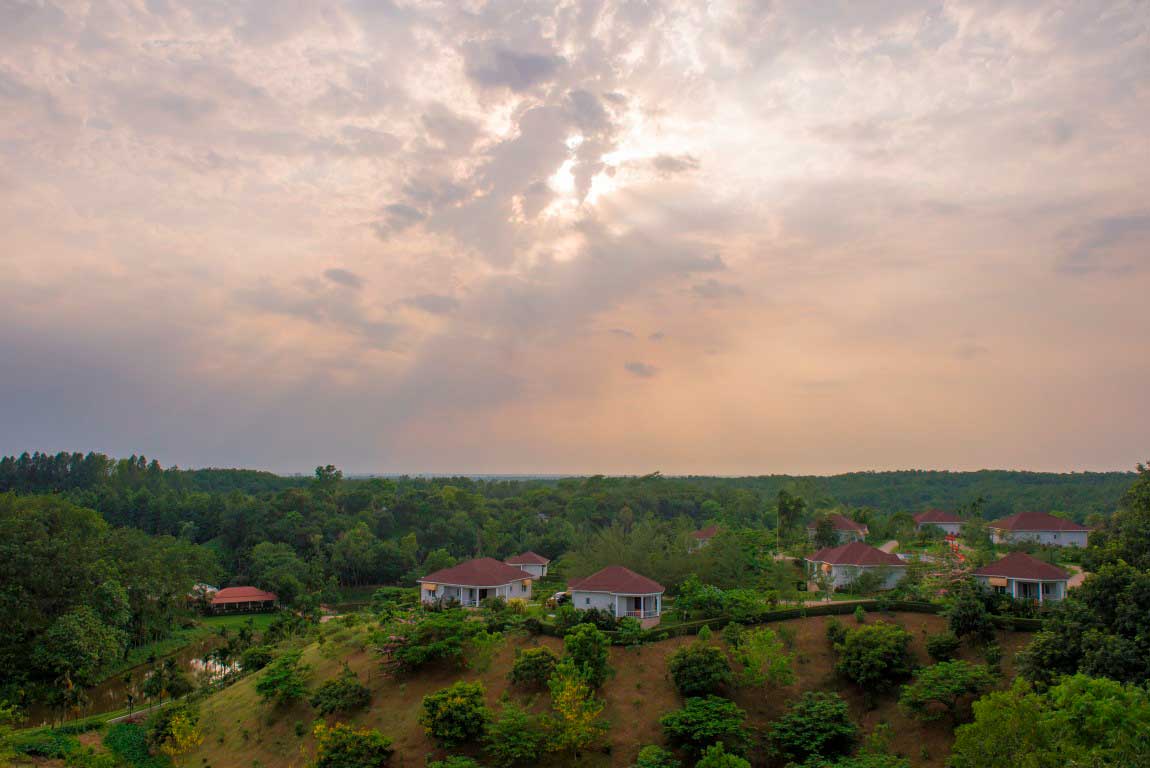
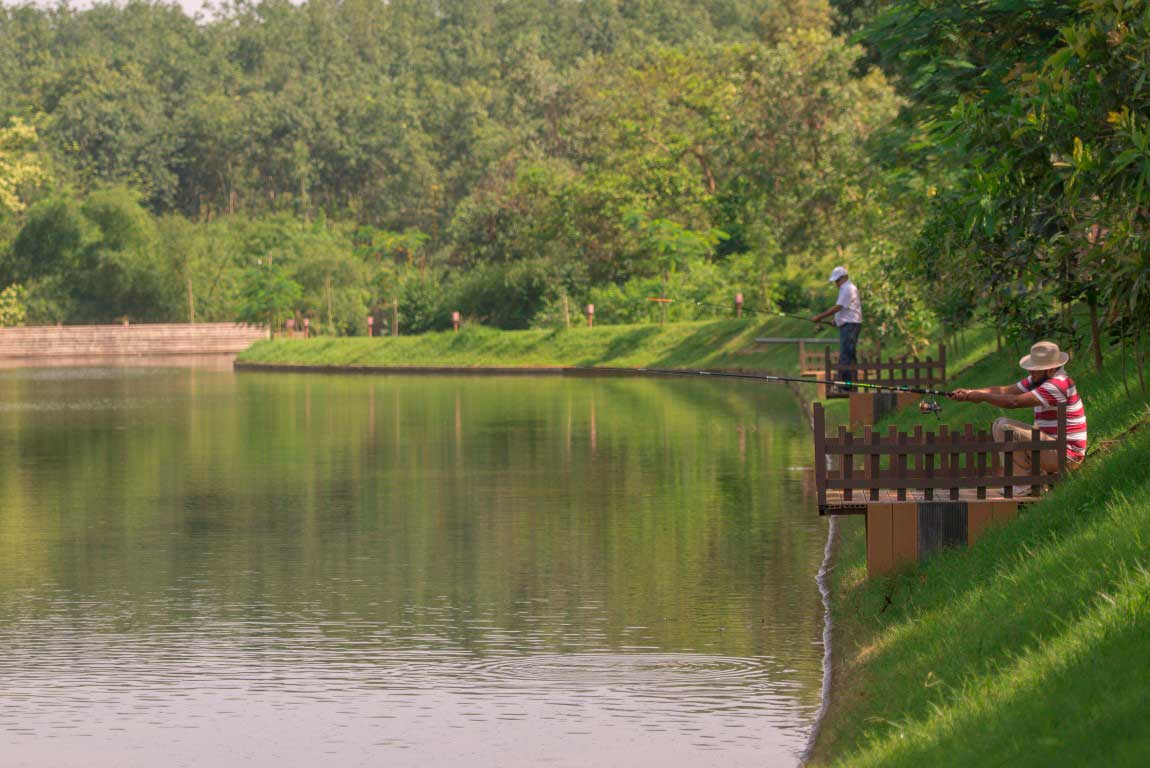
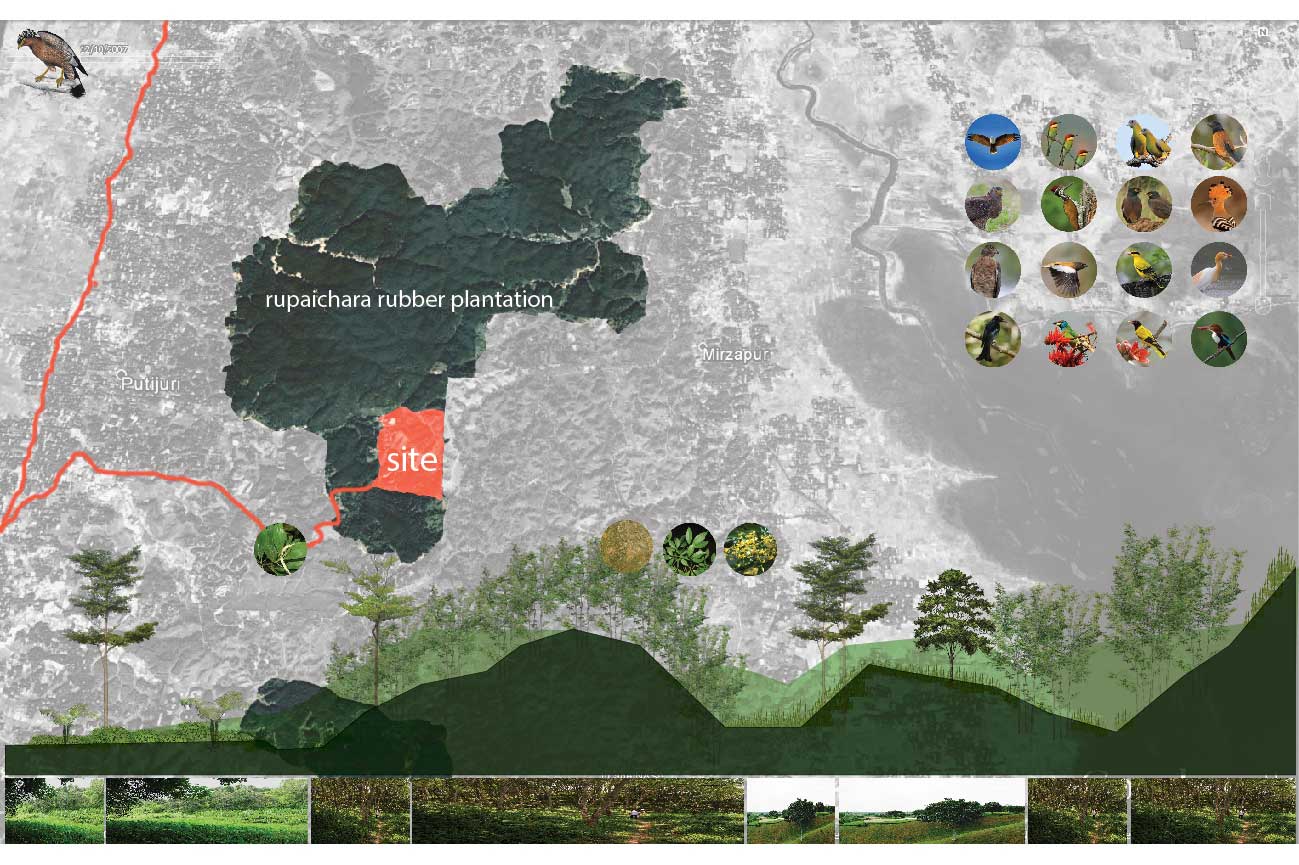
The Palace Luxury Resort and Spa are strategically located amidst remarkable landscapes, including the Rupaichara rubber forest, the Brindaban Tea Estate, and one of the ecologically protected zones, Hail haor Baicca Beel. It is home to many avian species migrating locally and migratory birds from neighboring countries that take shelter in the area's tall trees and play a significant role in the ecosystem. Working in such a landscape was a challenging and humbling experience at the same time.
Our first experience of the site was not in broad daylight. It was way past sunset when we entered the area after a laboriously long journey through the dense fog around 1:00 am. We passed through the Brindaban Tea estate, the rubber forest and entered the site without any visual cue to guide us. As we started walking, the only sound echoing in the darkness was the sound of Asian Barred Owlet, a common resident of the area but very uncommon to the ears of city dwellers. We spent the night at the General Manager's bungalow outside the site, eagerly waiting for the following day to set our eyes on the surroundings while listening to the vivid sound of Tokay Gecko.
At 6:00 am the following day, we woke up to the different songs of Barbets, Red-whiskered bulbul, Black Naped Oreols, Woodpeckers, and the distant call of crested serpent Eagle and realized our resting place was nestled between natural wilderness. Walking further toward the hilly areas of the site, gradually Rupaichara rubber forest located on the terraced slopes became visible. The rubber forest has been there for many years. The nature of rubber species is that it absorbs moisture, dehydrates the soil, and makes it loose, resulting in slope erosion, restricting other plants from growing underneath, and rapid regeneration. We discovered that the springs and valleys downstream went dry due to the forest. Any vegetation growth underneath rubber trees was trimmed off, allowing the monoculture to grow and expand, not knowing the disadvantages. Therefore, species diversity was minimal, specifically faunas and mammals that depend on rubber very low as it is not native species.
Other existing trees include Chapalish, Mandar, and Jackfruit trees scattered all over the site, where we saw the only mammal, Capped Langur, and foxes.
The tea garden we passed while entering the site had visibly more species diversity than the rubber forest, despite the tea garden being a monoculture. The reason for this diversity is the Beetle planting habits of the locals who live in scattered settlements at the periphery of the tea garden. These settlements are located in a fragmented patch, a better preying ground for the raptors.
The existing landscape combined bare spots and small forest patches. The North of the site had a /small forest patch containing about 50-60 varieties of trees and plant species. Every forest patch we passed through showed an exuberant number of birds circling the air and filling it with their song; however, once we arrived in barren spots, the chirping of the birds abruptly faded. Our walkthrough hardly showed a diversity of mammals, and some noticeable avians included Raptors, Shikra, and Sprangled Drongo, which were seen mainly in the forest patches.
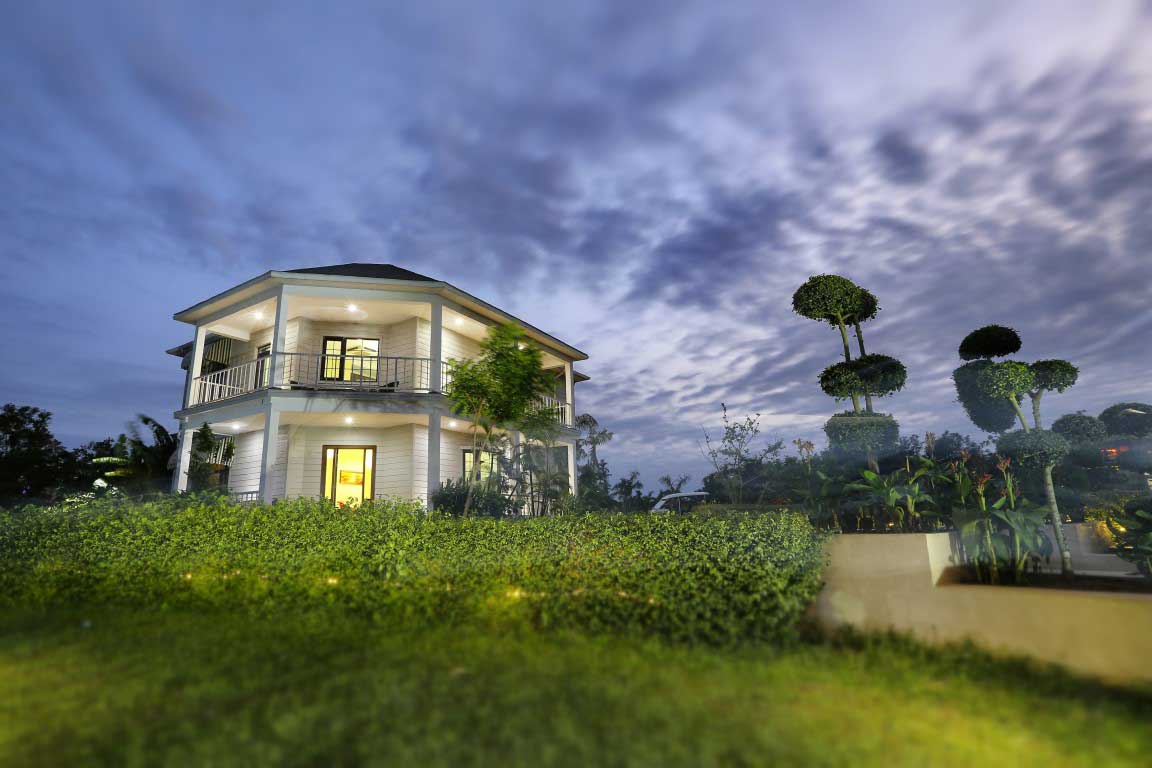
Most of the guest houses of the Resort were completed along with the road networks when we were given the project. The owner’s inclination towards a uniform landscape was visible as the site was maintained by almost 400 laborers working at different parts of the resort, trying to control the wild nature of the site manually.
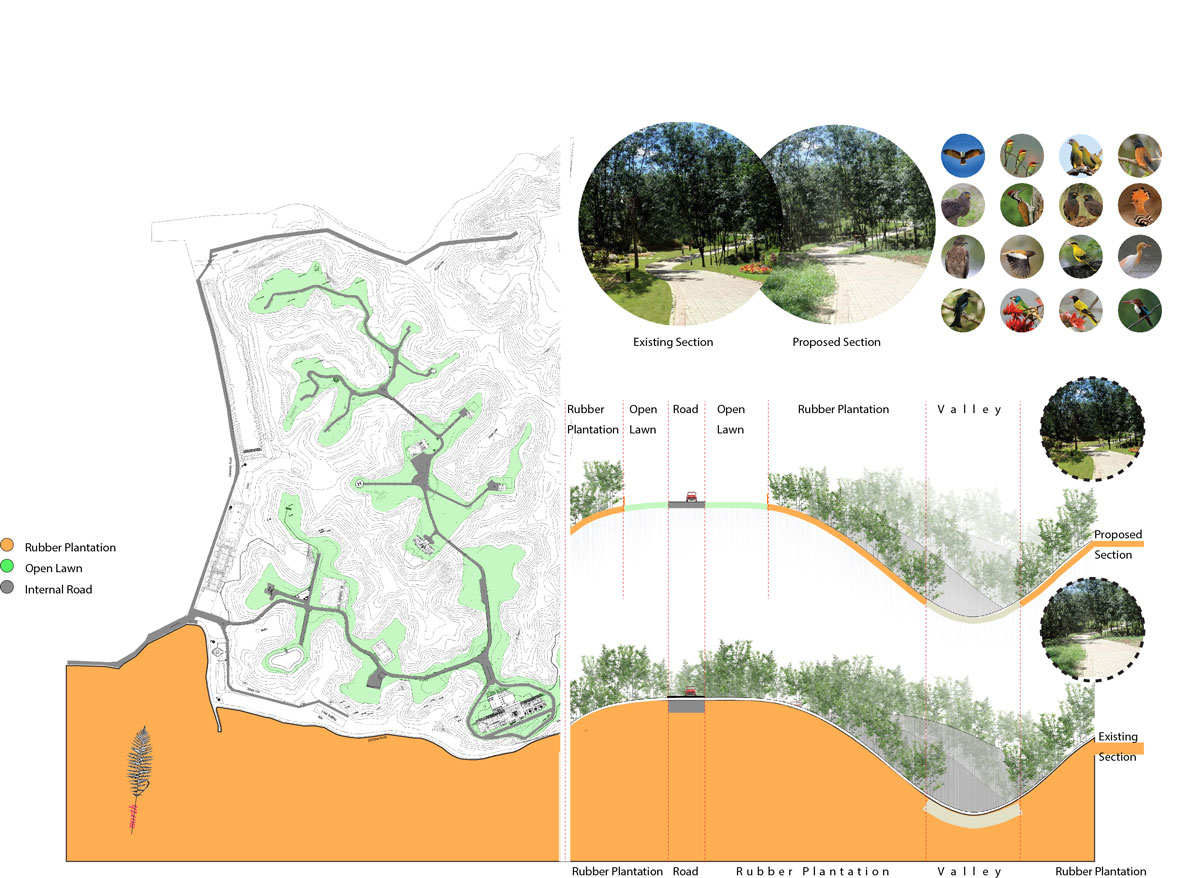
Since it’s a tourist spot, avoiding the conflict between wildlife and tourists was a significant challenge. We selected a few areas on the site to leave them natural and wild and let them merge with the context, while some spots and routes with Human access were modified to make them safer for the tourists.
One of the project's challenges was deciding the extent of the landscape that needed to be maintained. Our goal was to propose low-maintenance landscape solutions to reduce the workforce required to maintain the site while keeping it usable for tourists and safe for wildlife.
A boundary line using natural vegetative barriers was proposed along the primary access routes for the safety of tourists and wildlife. Any unsafe openings along the road were enclosed with a natural barrier that would mature in a year instead of using harsh fencing or new element to the landscape. Sheora and Kamini were planted as the natural barrier commonly used as a hedge due to their heavy foliage and subtle fragrance. It is also thick enough to protect kids but permeable for wildlife.
To protect the site, native species, and the existing wildlife, restoring the rubber forest and proposing alternative species that enhance the ecosystem's performance and shelter the wilderness was necessary. Two layers of rubber forest were removed instead of logging the entire forest to prevent soil erosion and landslide. These barren layers were planted with 150 varieties of about 100,000 species for reforestation, and the logs of the rubber trees were reused as retaining walls for the slopes. Seven ficuses were planted every 50 feet as the host or mother plant for other species to promote the propagation process through birds.
To preserve the existing biodiversity and wilderness of the site, regeneration of the valleys and dry springs was crucial. Fifteen types of bamboo species and specialized trees were planted around the springs to increase the water-retaining capability of the soil and maintain a natural flow of the springs and valleys.
Proposed trees along the avenues were selected to show their seasonal variety of colors year-round with varied fragrances to enhance the air quality.
The combination of species would give the visitors a unique sensory experience as they walk through the site listening to the rustling sound of leaves, seeing the variety of flowers and foliage covering the ground beneath, and feeling the changing textures of the walkways and paths. These species included Palash, Shimul, Mandar, Kadam, Shornochapa, muchkunjchapa, gamari, kanchon, Sonalu, Javan Sonalu, and Jarul.
Every 200 feet of the site has landscaped spots with shrubs, nectar-based plants, fruit-based plants, and water plants to attract birds and butterflies, and every plant used for the landscaping is native and collected from the site surroundings.
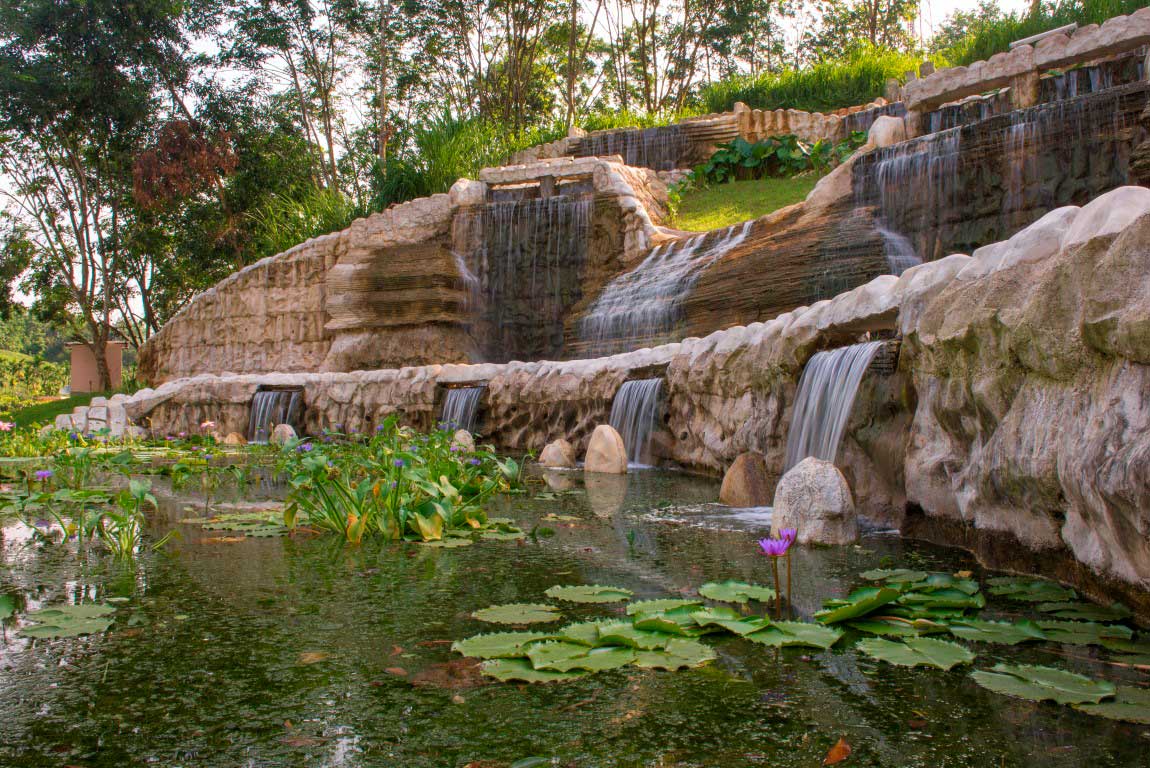
At the main entrance against the existing retaining wall of the site, an artificial waterfall of about 10,000 square feet was proposed using aquatic vegetation collected from the local Haor. Three trekking routes were proposed along the springs to enjoy the wilderness and the landscape from different heights. Natural pathways, bridges made of bamboo across the streams, and resting places on various site contours were proposed with a minimalistic design approach and local construction techniques.